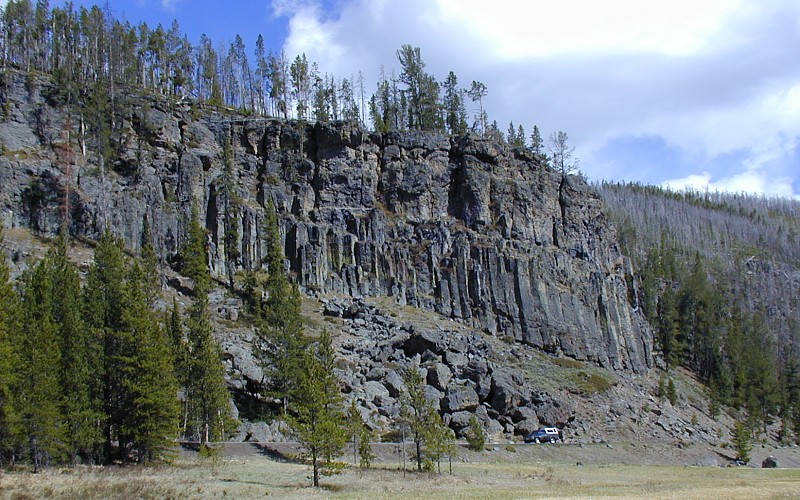
A close photograph can turn a volcanic outcrop into an almost abstract pattern: dark planes, curved scars, and thin highlights. Step back in the photographic sequence and the same texture acquires a setting. It belongs to a cliff, a slope, a path, and a place with a history. A useful field record preserves both scales.
The method below is an editorial workflow for observing volcanic glass in place. Yellowstone provides a concrete example of resource protection; conditions and permissions must be checked with the land manager for each destination.
Begin with the view you can reach
Choose a permitted, stable viewpoint before deciding what the composition needs. Frame a wide view that records the outcrop and surrounding terrain, then a medium view of the relevant texture. A longer focal length can isolate a detail from the same position. If that position cannot show a feature clearly, record the limitation in the caption.
Yellowstone's photography guidance requires photographers in thermal areas to remain on trails and boardwalks, with tripod legs also on the boardwalk and space for people to pass. It calls for designated roadside pullouts and distance from wildlife. Plan the frame around those constraints. Camera equipment does not create access to a closed or fragile area.
Keep the subject in place
Photograph the exposed face as found. Avoid rearranging fragments, brushing away coatings, or adding water to make a surface shine. Those interventions change the observation and can disturb the resource. Yellowstone's backcountry guidance prohibits collecting or disturbing rocks and cultural or archaeological resources.
Where a safe, permitted close view is available, an optical zoom and changing ambient light can reveal texture without handling the rock. A scale can help, but only if placing it is allowed and causes no disturbance. If a precise scale is unavailable, say so. An uncertain size is more useful than a false measurement.
Make a sequence that another person can read
Record three linked frames: the setting, the part of the outcrop you are discussing, and the visible detail. Keep the file numbers together in a notebook. Add the date, viewpoint, approximate direction of light, and whether the surface was wet or dry. A note such as “curved fracture visible in side light” separates the observation from an inference about how it formed.
A close crop should remain traceable to the wider view. Preserve the original files and describe substantial edits or composites when sharing them. For sensitive cultural material, follow the responsible authority's advice before publishing precise locations.
A field photograph becomes more useful when its caption preserves the conditions under which it was made.
Check access and photography requirements separately
Before a trip, read current closures and site instructions. Before an organized shoot, read the destination's photography requirements too. Yellowstone's current permit page considers group size, equipment, resource disturbance, public access, exclusive use, and busy locations. A small group is only one condition; it is not a blanket exemption. The same page prohibits drone launching, landing, or operation in the park.
These links were checked on 9 October 2026. Recheck them when planning a visit, because access and requirements can change. The finished record should show what was visible from the allowed viewpoint and leave the subject available for the next observer.